Splitting the Holidays When Both Families Want You
Sep 29, 2026
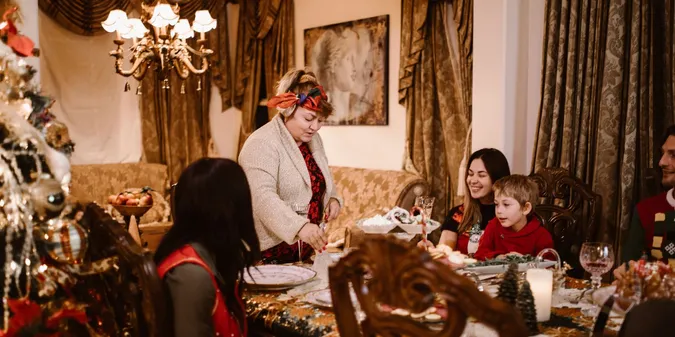
October is when it starts. Someone asks what you're doing for Thanksgiving and you realize you don't know, because the real question has four parts: whose parents, whose table, whose drive, and whose uncle.
For interracial couples the calendar question weighs more. It is about more than picking a house. You are choosing which relatives get to see the two of you together in person, and which ones get to talk about it afterward.
The couples who get through December calmly are usually not the ones who love each other more. They are the ones who decided in advance, instead of negotiating in the driveway with the engine running.
Write the rotation down
Pick two years, not one. Thanksgiving with one family and Christmas with the other, then swap. Put it in the calendar you both actually look at, and tell both sets of parents in the same week, in the same words.
That last part matters more than the plan itself. If your mother hears it from you and his mother hears it from him a week later, one of them will feel like an afterthought, and you will spend January explaining yourself.
Decide who handles which conversation
Each of you talks to your own people. You call your parents about your side, he calls his. It sounds obvious and couples skip it all the time, usually because one partner is better at managing a difficult mother and ends up doing both jobs. That works until it doesn't.
Plan for the comment
Sooner or later you will sit at a table where someone makes a remark about your relationship. Handling criticism from family and friends is a skill you can learn, and the couples who handle it well separate the remark from the person who made it. Your aunt's comment about people like you is usually twenty years of her own history talking. That does not make it acceptable. It does mean you can answer the sentence without writing off the relative.
Agree on one line you will both use in the moment, short and boring enough that it does not invite a debate at the table. Then have the real conversation later, at home, between the two of you.
If the two families are 500 miles apart
Then the rotation has a price, and pretending otherwise is how couples end up resenting each other by New Year's. One of you flies on the holiday every other year. The other one sits in a car for nine hours. Nobody gets a quiet morning.
Hosting once every few years changes the maths. The first time you do it, both families are guests in your home instead of you being a guest in theirs. You cook, you decide when dinner starts, and nobody has to pick a side. It also costs more money and about a week of planning.
When people ask how to get along with the family in a black and white relationship, the honest answer is that it comes down to a series of small decisions rather than one big conversation. Who hosts. Who calls whom. Which comment you let go and which one you answer. Get enough of those right, and the big conversation never happens.
What does not work
Trying to see everyone. You know the plan, because you have probably tried it: leave Thursday night, drive four hours, do a second dinner on Friday, sleep on a couch, repeat. Do it once and you will spend the whole weekend in the car, arriving tired at both houses and fully present at neither.
Being fair to everyone usually means being unfair to the two of you. Nobody says that out loud at the table, but everybody feels it by Sunday.
What to do this month
Decide before October. Agree on the rotation for two years. Tell both families on the same weekend. Book the flights while they are cheap. Then the argument in November is about parking, which is a much better argument to have.